Health First cardiologist says AEDs can save lives on the field.
Quick access to an AED gives athletes and spectators a better chance of surviving cardiac arrest.
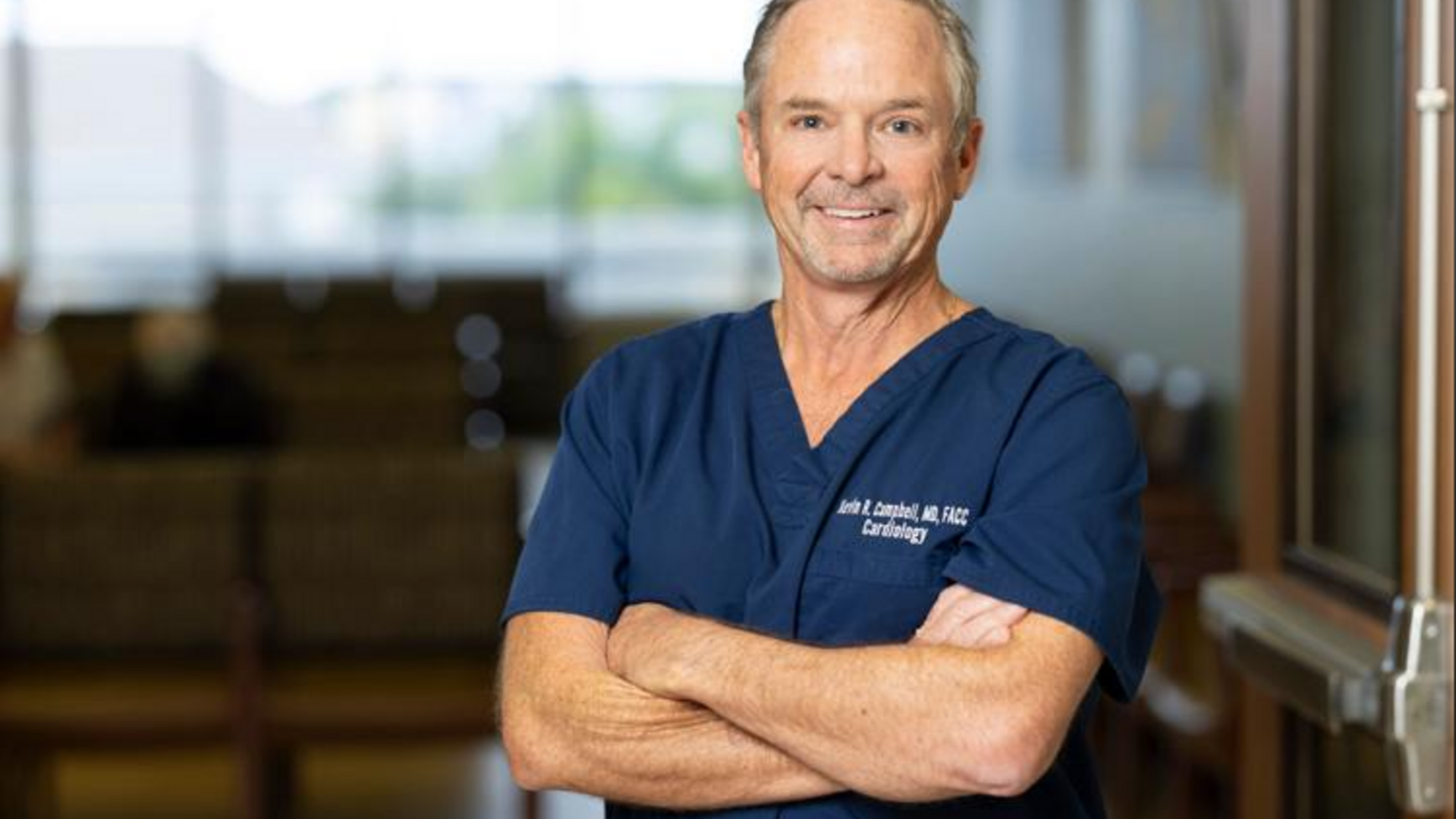
Dr. Kevin Campbell MD, FACC, MBA, CPE a cardiologist with Health First Medical Group, emphasizes the importance of rapid response to sudden cardiac arrest, including early CPR, EMS activation and access to an AED.
When a young athlete collapses on the field or court, there is no time to wait. Sudden cardiac arrest can happen without warning, including in seemingly healthy young athletes. While it is not common, sudden cardiac arrest and death are serious risks in youth sports, and exercise can trigger a cardiac event in athletes with an underlying heart condition. When it happens to a young person, it is devastating.
Health First Medical Group cardiologist Dr. Kevin Campbell, MD, FACC, MBA, CPE, says having an automated external defibrillator, or AED, nearby can mean the difference between life and death.
“An AED is an automatic external defibrillator. It’s a device that anybody can use. Once activated, the device will tell you exactly what to do”
AEDs are designed to be simple enough for a bystander to use. The device analyzes a person’s heart rhythm and determines whether a shock is needed. This shock can mean the difference between life and death.
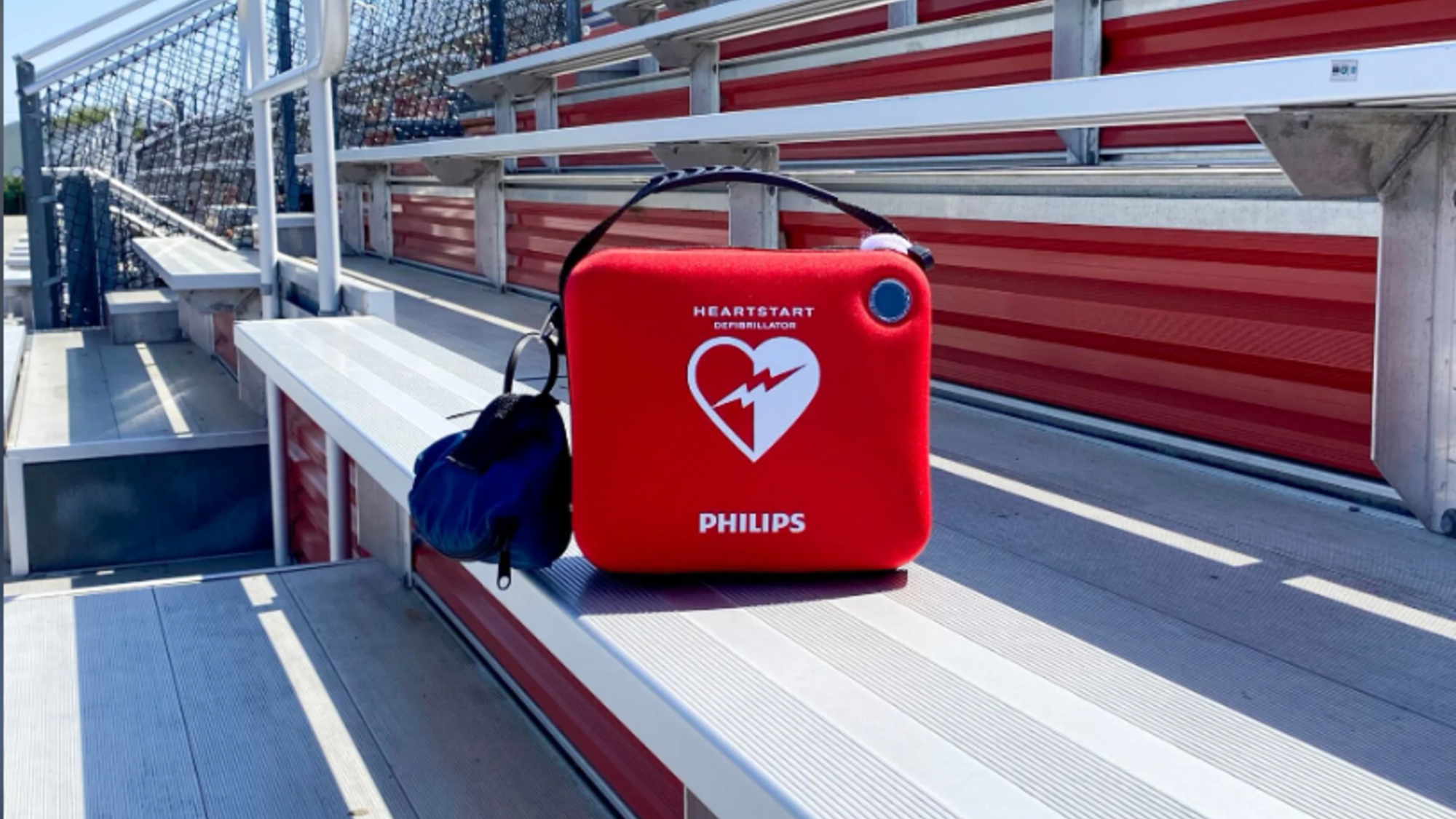
An automated external defibrillator, or AED, can b e a lifesaving tool when sudden cardiac arrest strikes at a sporting event.
“It talks to you. You just turn it on. What it does is it analyzes the heart rhythm of patients who may have collapsed in the field, in church, at a football game, at a basketball game, anywhere in town. It analyzes the heart rhythm if a shock is required to terminate a dangerous heart rhythm. It delivers that shock and saves that person’s life.”
Sudden cardiac arrest is the leading cause of death among young athletes during sports and exercise. Cardiovascular conditions account for about 75% of sports-related fatalities, with males affected more often than females. Basketball and football are among the sports where these events occur most often.
Campbell says some heart conditions can go undetected because young athletes may have no symptoms.
“There are so many diseases that can be easily undiagnosed in children and young high school athletes, as well as college athletes, because they’re often asymptomatic. Some of these include hypertrophic cardiomyopathy, as well as being born with anomalous coronary arteries, meaning they don’t run the particular path that they normally run in the heart and this can result in rhythm abnormalities.”
That is why screening and preparedness are so important. Within Brevard Public Schools, EKG screenings are mandatory for student-athletes. But Campbell says screenings alone are not enough to identify every athlete who could be at risk.
When cardiac arrest happens, every minute matters.
“Minutes matter after someone collapses. We know that early CPR, early activation of EMS and most importantly, early defibrillation saves lives.”
The chain of survival begins with recognizing the emergency, calling for help, starting CPR and getting an AED to the person as quickly as possible.
Campbell encourages everyone to become familiar with AEDs and not be afraid to use one.
“I would advocate that every single person in our community familiarize yourself with AED use. It’s part of basic CPR. If you go to a basic CPR class, they’re going to teach you about an AED. But don’t be afraid to use one even if you are untrained.”
He says the device will guide users through the process and that bystanders should not hesitate to act.
“Grab it. Turn it on. It’s going to tell you exactly what to do.”
For coaches, parents and spectators who witness an athlete collapse, Campbell says the first step is to activate EMS and get the nearest AED.
“Quick CPR, quick defibrillation, activation of EMS saves lives. It’s been proven time and time again.”
And AEDs aren’t just for the athletes on the field.
“One thing that you also need to remember is that by having AEDs at these sporting events, you can also save people who are spectators, not just the athletes. If you look at the statistics, about 50% of the saves at a sporting event are athletes. The other 50% of people were in the crowd. So, it’s so important to have these.”
Campbell believes AEDs should be a standard part of every sporting environment.
“AED’s should be it every sport event, every high school practice, every junior high practice, every sporting event. They should be readily available and people need to know how to use them.”
He also points to a new statewide requirement. By 2027, Florida schools will be required to have an AED readily available.
For Campbell, the message is simple: When someone collapses, don’t stand by.
“When in doubt, go grab the AED, turn it on. Listen to what it tells you to do. I’d rather you hook an AED up to somebody that they don’t need, and it tells you no shock required than to stand around and watch the patient arrest.”
Because when a heart stops, seconds matter.
“We know the faster you defibrillate a person in cardiac arrest, the more likely they are to survive. Survival at a hospital is less than 10%. If you have an AED, that survival rate goes up significantly.”